
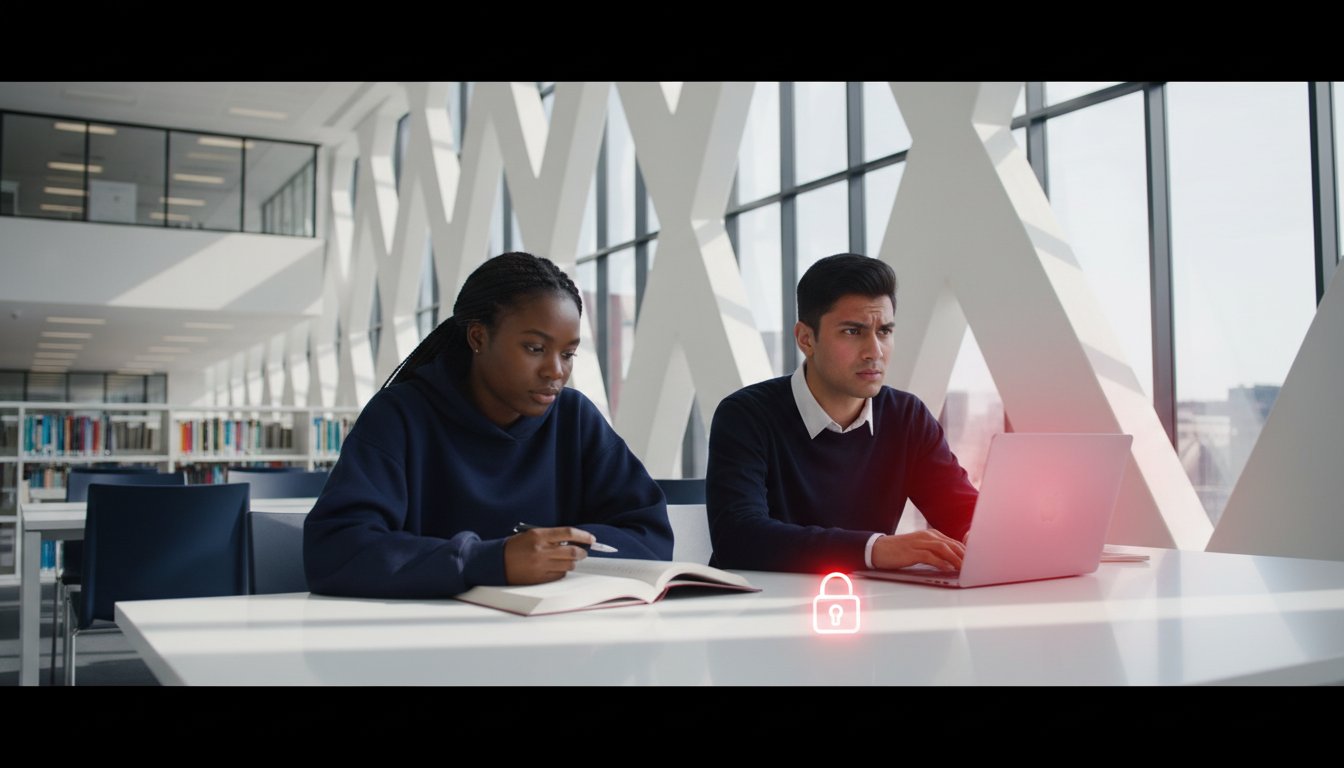
What if the time you spend searching for free porn ends up costing you your entire £4,222 maintenance loan for the term? You've worked hard to navigate the complex eligibility criteria for university and manage your student finance responsibly. It's understandable that you'd seek out cost-free content when your budget is tightly allocated toward rent and essential textbooks. If you're looking to maintain your privacy while balancing the pressures of a demanding degree, you aren't alone in feeling concerned about the safety of your personal data.
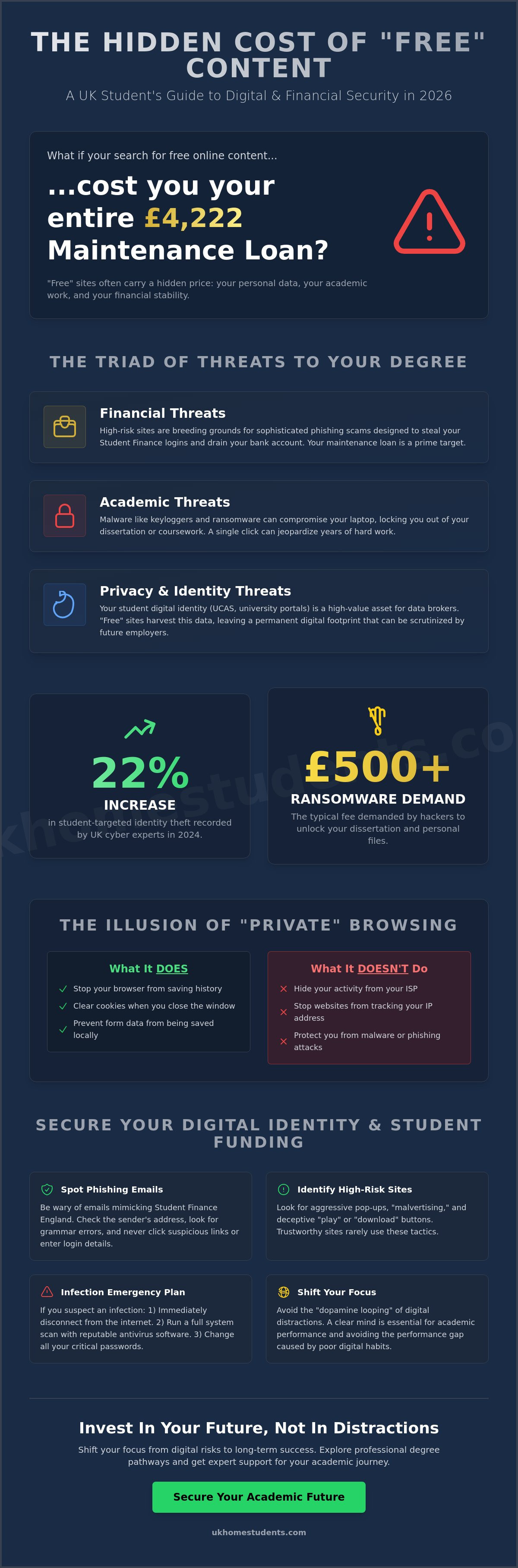
The reality is that "free" often comes with a hidden price tag involving sophisticated malware that can cripple your laptop or compromise your sensitive banking details. This article promises to help you secure your digital identity and protect your bank account from the 22% increase in student-targeted identity theft recorded by UK cyber experts in 2024. We'll walk you through the essential steps to maintain your cybersecurity and ensure your academic focus remains on your degree. You'll learn how to identify high-risk sites and implement the expert-recommended safeguards that keep your personal information and student funding safe from external threats.
Key Takeaways
- Understand how high-risk sites use malware and ransomware to compromise your laptop, potentially jeopardising your degree coursework and personal data.
- Discover the psychological impact of "dopamine looping" on your study sessions and why these digital habits often lead to a significant gap in academic performance.
- Identify the sophisticated phishing scams hidden within searches for free porn that specifically target your student bank account and maintenance loan details.
- Learn how to secure your digital identity by spotting fraudulent emails that mimic Student Finance England, ensuring your funding remains protected throughout your studies.
- Shift your focus from digital distractions to long-term success by exploring professional degree pathways and expert support tailored for your academic journey.
What Does "Free Porn" Actually Cost a UK Student in 2026?
If you are currently navigating the pressures of a UK degree, you understand that nothing of value is truly without cost. While the term free porn suggests a zero-pound transaction, the digital economy of 2026 operates on a much more invasive currency: your personal data and academic security. The trade-off for instant gratification is often a compromise of your long-term digital safety. For students, who are frequently managing limited budgets and high-stakes deadlines, the hidden risks of high-risk browsing can have a cascading effect on both financial stability and institutional access.
Data harvesting platforms specifically target the student demographic because your digital identity is exceptionally valuable. Between your UCAS details, Student Finance England logins, and university portal credentials, you possess a high-value profile that data brokers covet. Protecting your digital health is now a core requirement for any successful higher education journey. It's about securing your future against the predatory tactics of platforms that view your attention as a product to be sold.
The Illusion of Anonymity Online
Many students mistakenly believe that "Incognito Mode" or "Private Browsing" provides a robust shield against external tracking. It doesn't. While these settings prevent your local device from saving a history, they do nothing to hide your activity from your Internet Service Provider (ISP) or the sophisticated trackers embedded in adult sites. A 2024 report by the Open Rights Group indicated that UK ISPs retain metadata that can be accessed under specific legal frameworks, meaning your "private" sessions aren't truly invisible. Data brokers often cross-reference your IP address with other online behaviours to build a comprehensive profile of your habits. Your digital footprint acts as a permanent, unerasable record of your online associations that future employers may scrutinise during the vetting process for high-security career paths.
Why "Free" is a Marketing Trap
Tube sites operate on a business model that relies on aggressive subsidisation through data sale and intrusive advertising. You are likely to encounter "malvertising," where malicious scripts are hidden within advertisements or "skip" buttons. Understanding the cybersecurity risks of free porn sites is essential, as these platforms have historically been vectors for malware that can bypass standard antivirus software. If your laptop is infected, the cost isn't just a repair fee; it's the potential loss of your dissertation or the compromise of your bank account. High-risk browsing is a primary precursor to targeted phishing attempts. Once a site identifies your interests and location, you become a prime target for fraudulent emails designed to steal your maintenance loan or tuition fee information.
Cybersecurity Risks: Why "Free" Sites Are a Threat to Your Degree
Accessing free porn sites often feels like a private choice, but the digital infrastructure behind these platforms frequently hides sophisticated threats to your hardware and academic data. In 2026, malicious actors have refined their methods to target students who rely on personal laptops for both leisure and university assignments. A single click on a deceptive "Play" button can initiate a background download that bypasses standard browser security. This isn't just about a slow computer; it's about the integrity of your entire academic career. If your device is compromised, every file, from your UCAS personal statement to your final year research, is at risk of being deleted or sold.
Malware and Your Academic Work
Malware remains the primary weapon used by high-risk websites to exploit users. Keyloggers are particularly dangerous for students because they silently record every keystroke you make. This allows hackers to harvest your university portal credentials, giving them access to your internal emails and private student records. Ransomware is another escalating threat. These programmes encrypt your files and demand a payment, often exceeding £500, to restore access. For a student on a tight budget, losing a 10,000-word dissertation weeks before the deadline is a catastrophic event that no maintenance loan can fix. If you suspect your laptop has been infected, you should:
- Immediately disconnect from the internet to stop data exfiltration.
- Run a full system scan using a reputable, paid antivirus service rather than a free version.
- Change all passwords from a different, clean device, starting with your university and banking logins.
The Risks of Public and University Wi-Fi
Many students browse the web while connected to shared networks like eduroam or library Wi-Fi. High-risk browsing on these networks creates a bridge for hackers to move laterally across the system. If you access unencrypted "free" platforms, you expose your session ID to anyone else on the same network. This technique, known as "Session Hijacking," allows an attacker to take over your active accounts without needing your password. Many of these sites lack basic SSL encryption, meaning your data travels in plain text. Using a reputable VPN is a non-negotiable step for maintaining basic digital hygiene when accessing any site on a shared network. Protecting your digital footprint is as essential as securing your student status through the correct channels. One compromised session on a university network can lead to your device being blacklisted by campus IT services, cutting off your access to essential learning resources during exam season.
Academic Focus vs. Digital Habits: The Performance Gap
Students often assume their private browsing habits stay separate from their academic performance. This is a dangerous misconception. If you're regularly searching for free porn, you're engaging in a high-stimulation activity that recalibrates your brain's reward system. This process, known as "Dopamine Looping," makes the slow, methodical work of reading a 40-page case study feel excruciatingly dull. Research from 2024 indicates that excessive digital overstimulation can lead to a 15% drop in cognitive endurance. You might find yourself staring at a lecture slide for an hour without absorbing a single sentence.
Academic burnout isn't always caused by overworking. Often, it's the result of digital fatigue. If you experience persistent brain fog, irritability during group projects, or an inability to stay focused for more than 10 minutes, your digital habits might be the culprit. Secure your academic future by identifying these triggers early. You can't expect to perform at a high level if your brain is constantly recovering from a dopamine crash.
The Science of Concentration
High-stimulation content effectively trains your brain to seek instant gratification. This makes it harder to process complex academic texts that require deep thought. Late-night browsing is particularly damaging to your degree prospects. It disrupts your REM cycle and reduces cognitive retention by up to 30%. During exam periods, a "Digital Detox" is essential for survival. If you want to maximize your results, you must replace passive scrolling with active, deep-work sessions that allow your neural pathways to reset.
Setting Boundaries for Success
Success in your BA (Hons) Business Management studies requires more than just attending seminars. It demands disciplined personal habits that mirror the professional world. Professional development starts with how you manage your private time and your digital footprint. Create a study environment that's physically and digitally separated from high-risk distractions. Intentional browsing means you log on with a specific purpose, rather than falling into a rabbit hole of free porn or endless social media feeds.
Establishing these boundaries early helps you build the resilience needed for a career in management. If you struggle to maintain focus, try these steps:
- Use website blockers during scheduled study blocks to prevent impulsive browsing.
- Keep your smartphone in a different room while reviewing core modules.
- Set a "digital sunset" at 9:00 PM to ensure your brain enters a restful state before sleep.
- Track your screen time to see exactly where your focus is leaking.
By treating your attention as a finite resource, you regain control of your schedule. This discipline ensures you're ready to meet the rigorous requirements of the UK education system and secure the grades you need for your future career.
Protecting Your Student Identity and Maintenance Loans
Your digital identity is your most valuable asset during university. Searching for free porn on unverified platforms often exposes your IP address and personal details to malicious scripts designed for data harvesting. This information is then sold to fraudsters who specialize in targeting UK students during vulnerable periods of the academic year.
Securing your identity requires a proactive approach. Follow these essential steps to lock down your digital footprint:
- Activate Multi-Factor Authentication (MFA): Enable MFA on your Student Finance England (SFE) account and university portal immediately. This ensures that even if a hacker steals your password, they cannot access your funding.
- Use Unique Passwords: Never reuse your university login for other sites. A breach on a low-security entertainment site could give hackers the keys to your academic records.
- Enable Bank Alerts: Download your bank's official app and turn on push notifications for every transaction. This allows you to spot unauthorized activity the moment it happens.
- Monitor Your Credit: Register with a free service like ClearScore or Experian. Regularly checking your credit report helps you identify if someone has tried to take out a loan or mobile phone contract in your name.
Fraudsters often send emails that look identical to official SFE communications, especially during peak payment windows in September, January, and April. In 2024, Action Fraud reported a 15% increase in student-targeted phishing scams. Real SFE emails will never ask for your full password or bank details via a direct link. If you receive a suspicious message, report it to [email protected] and forward it to the SFE security team. Staying vigilant prevents your funds from being diverted to a criminal's account.
Securing Your Financial Future
Cybercriminals frequently monitor high-traffic periods when students receive their maintenance loan installments. These lump sums make you a high-value target for "account takeover" attacks. If your financial data appears on a high-risk site after searching for free porn, you should assume your credentials are compromised. Change your banking passwords from a different, secure device and enable biometric login features where available. Setting up "spend limits" on your mobile banking app adds an extra layer of protection against large, unauthorized withdrawals.
Identity Theft and Your Career
A compromised digital identity can have repercussions long after graduation. Many graduate roles in finance, law, or government require rigorous background checks and security clearances. Financial instability or a poor credit history caused by identity theft can flag you as a high-risk candidate during vetting. Use a reputable password manager like Bitwarden or 1Password to isolate high-risk accounts from your professional and academic logins. If a data breach is confirmed, your first step is to contact your bank's fraud department to freeze your accounts and prevent unauthorized transfers. Protecting your reputation now ensures your future career remains on track.
Get an expert assessment of your student finance eligibility today.
Investing in Your Future with UK Home Students
The digital risks associated with searching for free porn in 2026 are substantial. Beyond the immediate threats of malware and identity theft, these distractions consume the mental energy you could use to build a stable career. Choosing to pivot away from high-risk online habits toward professional growth is a long-term investment in your safety and financial security. UK Home Students provides the steady hand you need to make this transition. We help you move past the noise and focus on legitimate, life-changing degree courses that offer a clear path to professional employment.
A focused academic journey provides a level of security that digital distractions cannot match. When you trade hours spent on risky websites for time invested in your education, you're building a foundation that pays dividends for decades. Our role is to act as your advocate, ensuring you don't feel overwhelmed by the technical nature of university applications or the intricate requirements of Student Finance England.
Unlocking Your Potential
Our team specializes in helping you find flexible pathways in high-demand sectors like Health, Business, and Computing. If you've lived in the UK for at least three years, you might qualify for significant financial support. We don't just point you toward a classroom; we handle the intricate details of your application and funding. Our consultants ensure you understand the eligibility criteria for maintenance loans and tuition fee grants. This professional intervention reduces the anxiety of the 2026 application cycle. You get to focus on your career ambitions while we manage the bureaucracy.
- Expert placement in Business Management, Cyber Security, or Health and Social Care.
- Step-by-step assistance with Student Finance applications to secure your funding.
- Access to campuses with flexible schedules that fit your current lifestyle.
- Personalized career mapping to ensure your degree leads to a high-value role.
Your Next Steps to Success
The first step to securing your future is a confidential eligibility check. If you lack traditional qualifications, don't worry. Many of our students successfully begin their journey through university courses with foundation year options. This route provides a vital safety net, allowing you to build academic confidence before starting your full degree. It's a proven way to bridge the gap between where you are now and where you want to be.
By choosing a supported academic journey, you replace the risks of searching for free porn with the tangible reward of a UK degree. Our expert assessment gives you a competitive advantage by identifying the exact funding and courses you qualify for right now. Don't let another year pass in a cycle of digital distraction. Contact our team today to start your application and secure your professional future.
Protect Your Degree and Your Digital Identity
Your academic success depends on more than just study hours; it requires a secure digital environment. Searching for free porn in 2026 exposes you to sophisticated malware that can compromise your personal data and your £9,250 annual tuition fee investment. With the National Cyber Security Centre reporting a rise in credential harvesting, protecting your student identity is essential for maintaining your maintenance loan eligibility. Don't let a momentary lapse in digital safety derail years of hard work or your standing with Student Finance England.
If you're ready to move beyond the risks and focus on your professional growth, we're here to help. Our team provides expert guidance on Student Finance eligibility and supports flexible degree pathways tailored to your circumstances. We offer professional UCAS application vetting to ensure your academic transition is seamless and secure. By choosing a path of clarity and security, you're investing in a future that's both stable and rewarding.
Secure your academic future with a free expert assessment from UK Home Students today.
Taking the right steps now ensures your university experience remains a launchpad for your career goals. You've got the talent to succeed, and we've got the expertise to guide you there.
Frequently Asked Questions
Is it safe to browse free adult content on university Wi-Fi networks?
Browsing free porn on university Wi-Fi isn't private because your institution monitors data traffic through the Janet Network. Most UK universities log internet activity to comply with the 2015 Prevent duty and internal Acceptable Use Policies. If you violate these terms, the IT department can flag your account for a disciplinary review. This could jeopardize your standing within the university and lead to a loss of network privileges.
Can visiting free porn sites lead to student loan identity theft?
Visiting unverified sites can lead to student loan identity theft through malicious scripts known as formjacking. These scripts steal the personal details you use for your Student Finance England login. CIFAS reported a 17% increase in identity fraud targeting students in 2023. If a criminal gains access to your account, they can divert your tuition fee grant or maintenance loan payments to their own bank accounts.
Does incognito mode protect my student laptop from malware?
Incognito mode doesn't protect your laptop from malware because it only prevents your browser from saving local history and cookies. It offers no defense against drive-by downloads or malicious pop-ups. Research shows that 40% of web-based malware is delivered through these automated scripts. Your device remains vulnerable to keyloggers that can capture your university passwords, personal information, and sensitive financial data.
How do digital consumption habits affect my academic performance?
Digital consumption habits directly impact your academic performance by disrupting your focus and sleep patterns. A 2022 study published in the Journal of Behavioral Addictions found that students with high levels of online adult content consumption saw a 15% decrease in their average grades. This habit often leads to procrastination, which makes it harder to meet strict UCAS deadlines or internal university coursework requirements.
What should I do if my university login details are compromised?
You must change your passwords immediately and notify your university IT Services department if your login details are compromised. Approximately 20% of UK students experience a credential breach each year. You should also contact the Student Loans Company at 0300 100 0607 to secure your funding. Enabling Multi-Factor Authentication adds a vital layer of protection for your academic records and ensures your maintenance loan remains secure.
Can future employers see my browsing history during background checks?
Employers can't access your private browsing history directly, but they often review your public digital footprint. Statistics from 2023 show that 70% of UK recruiters screen social media profiles during the hiring process. If your data is leaked in a site breach, your email address could appear on public databases. This might raise concerns during the enhanced background checks required for professional careers in law, finance, or education.
How can I protect my maintenance loan from online phishing scams?
You can protect your maintenance loan by never clicking links in unsolicited emails or text messages that claim to be from Student Finance England. Scammers specifically target the three main payment windows in September, January, and April. Always log in directly through the official GOV.UK portal to check your status. Using a dedicated, secure browser for financial transactions helps prevent phishing scripts from accessing your £9,250 tuition fee grant details.
Why do free porn sites contain so much intrusive advertising?
Free sites use intrusive advertising because they rely entirely on ad revenue to cover high server costs. Around 85% of these platforms use aggressive networks that deploy malvertising. These ads are designed to trick you into downloading software or clicking links that compromise your device. Searching for free porn often exposes your hardware to these risks, which can lead to expensive repairs or the permanent loss of your academic work.