

What if your next career move didn't just offer a steady paycheck, but a guaranteed path to a professional qualification and a significant salary increase? With the UK's healthcare sector projected to expand significantly by 2026, the demand for qualified professionals is reaching record highs. If you are searching for health and social care jobs, you likely know how rewarding this field is, yet the path to the top often feels obscured by complex entry requirements. You might feel uncertain about which roles require a degree or how to move beyond entry-level positions to secure your long-term future.
We understand that the transition from a support role to a registered professional can feel overwhelming. This guide simplifies that journey, showing you exactly how to secure the most rewarding roles in 2026. You'll discover a clear list of job examples and learn the vital difference between entry-level and professional positions. We also explain how to use a degree and Student Finance to increase your salary and achieve the career progression you deserve. From understanding UCAS applications to identifying the right qualification, we provide the expert assessment you need to move forward with confidence.
Key Takeaways
- Understand why Birmingham is a strategic hub for healthcare innovation and how the 2026 sector landscape offers unparalleled job security for qualified professionals.
- Identify the diverse entry-level health and social care jobs birmingham provides, including foundational roles like Care Assistants and specialized Support Workers.
- Discover the specific educational pathways and higher education qualifications required to transition into professional roles such as Social Work and Occupational Therapy.
- Master the "Six Cs" of care and navigate mandatory UK regulatory requirements, such as the Disclosure and Barring Service (DBS) check, to ensure your eligibility.
- Learn how to advance from frontline experience to management by enrolling in a BSc (Hons) Health and Social Care degree to maximize your career potential.
Understanding the Health and Social Care Sector in Birmingham
By 2026, the landscape of Health and Social Care in the UK has evolved into a highly integrated system that prioritizes community-based support and digital health solutions. If you are pursuing a career in this field, the West Midlands represents one of the most robust employment markets in the country. Birmingham acts as a central hub for healthcare innovation, housing some of the largest NHS trusts in Europe alongside a thriving private care sector. This dual-market structure provides a wide range of settings for graduates, including acute hospital wards, specialized residential facilities, and local community centres.
Securing health and social care jobs birmingham requires an understanding of how these different environments interact. While hospitals focus on clinical intervention, the social care side manages long-term wellbeing and independence. The city's infrastructure supports this through massive institutions like the Queen Elizabeth Hospital and Birmingham Women’s and Children’s NHS Foundation Trust. These organizations provide a foundation for thousands of roles that combine medical knowledge with social support frameworks. You will find that the diversity of the local population also creates a need for culturally competent care, making the Birmingham market unique compared to smaller UK regions.
The Economic Impact of Care Jobs
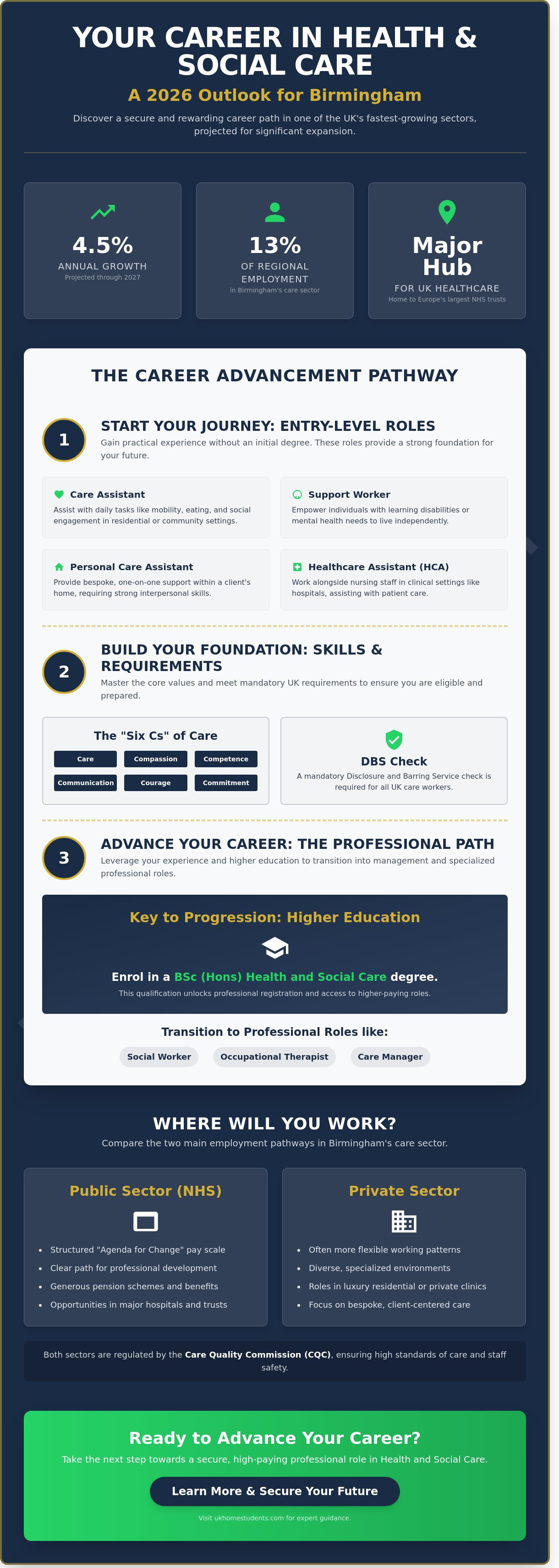
The local economy in Birmingham relies heavily on the care sector, which currently accounts for approximately 13% of all regional employment. If you are looking for job security, this industry offers a level of stability that few other sectors can match. Demand for care professionals is projected to grow by 4.5% annually through 2027. This growth is driven by the shift towards Integrated Care Systems (ICS), where health and social services work together to provide seamless patient journeys. For workers, this means more opportunities for cross-disciplinary roles and faster career progression within the local authority and private networks.
Public vs. Private Care Roles
If you apply for a role within the NHS, you will encounter the "Agenda for Change" pay scale; this provides clear structures for salary, pensions, and professional development. Private sector providers often offer more flexible working patterns and specialized environments, such as luxury residential care or private mental health clinics. Local authority social work departments offer another pathway, focusing on statutory duties and safeguarding. All these workplaces are regulated by the Care Quality Commission (CQC), ensuring that regardless of whether you choose a public or private employer, the standards of care and staff safety remain consistently high. Understanding these distinctions helps you target the right health and social care jobs birmingham based on your specific career goals and lifestyle needs.
Entry-Level Health and Social Care Jobs in Birmingham
Birmingham's healthcare sector is a primary driver of the local economy, providing thousands of opportunities for those entering the workforce. You don't always need a degree to secure health and social care jobs birmingham; many foundational roles provide on-the-job training that prepares you for future academic study. These positions allow you to gain practical experience while earning a competitive wage in the West Midlands.
- Care Assistant: This is the bedrock of the sector. You'll work in residential homes or community settings, helping residents with daily tasks such as mobility, eating, and social engagement.
- Support Worker: These roles focus on empowering individuals with learning disabilities, autism, or mental health needs. You'll help them live as independently as possible.
- Personal Care Assistant: This involves providing bespoke, one-to-one support within a domestic setting. It's a highly personal role that requires strong interpersonal skills.
- Healthcare Assistant (HCA): Often based in clinical environments like the Queen Elizabeth Hospital or Birmingham City Hospital, HCAs work alongside nursing staff. You can find detailed descriptions of these clinical pathways via NHS Health Careers, which outlines the progression from HCA to registered practitioner.
Starting Without a Degree
If you don't have a degree yet, you can often secure your first role with GCSEs (typically grades 9 to 4 in English and Maths) or relevant life experience. Many employers in Birmingham value the empathy gained from caring for a family member as much as formal qualifications. To work in a CQC-regulated environment, you'll need to complete the Care Certificate. The Care Certificate is the industry entry standard that ensures all health and social care workers have the same introductory skills and knowledge to provide safe, compassionate care.
Day-to-Day Responsibilities
The rhythm of health and social care jobs birmingham varies depending on your specific employer. Most frontline staff work on a rota system, which often includes 12-hour shifts such as 7:00 am to 7:00 pm or overnight stays. While the work is physically demanding, the emotional rewards are significant. You'll see the direct impact of your support on a person’s quality of life every day. These roles help you build foundational skills in safeguarding, communication, and patient dignity. If you're unsure how your current experience aligns with university entry requirements, you can request an expert assessment to clarify your academic path and funding eligibility. This practical experience serves as a vital springboard for higher education, giving you the "inside track" on how the UK care system functions in practice.
Professional Careers: Roles Requiring Higher Education
A degree transforms your career trajectory from frontline support to strategic leadership and clinical assistance. If you're looking for health and social care jobs birmingham offers a wealth of opportunities for qualified professionals who can manage complex caseloads and regulatory requirements. These roles demand a level of theoretical knowledge and legal understanding that only higher education provides.
Social Workers act as vital advocates for vulnerable children and adults. You'll navigate complex legal frameworks, manage court proceedings, and coordinate with multi-agency teams to ensure safety. Occupational Therapy Assistants focus on practical rehabilitation. They help patients regain independence by designing bespoke solutions for daily living, such as mobility aids or home modifications.
Managerial positions require a different set of skills. Care Home Managers oversee every aspect of a facility, from staff recruitment to financial sustainability. They ensure the service remains compliant with strict standards set by the Care Quality Commission. According to Skills for Care, high-quality leadership is the most significant factor in achieving "Good" or "Outstanding" inspection ratings. Health Service Managers take a broader view, focusing on strategic planning and resource allocation within the NHS or private healthcare groups.
Specialised Clinical and Community Roles
Mental Health Support Leads coordinate crisis interventions and long-term recovery pathways. They work alongside clinical psychologists to stabilize service users during difficult periods. Community Outreach Coordinators bridge the gap between local residents and essential services, ensuring that marginalized groups access the help they need. Securing a health and social care degree birmingham provides the clinical grounding and administrative expertise required to excel in these specialized community settings.
The Salary Advantage of Professional Qualifications
The financial difference between entry-level roles and degree-qualified positions is substantial. While an uncertified care assistant often earns the National Living Wage, a BSc (Hons) qualification allows you to enter the NHS at Band 5. As of the 2023/24 pay scales, a Band 5 starting salary is £28,407 per year. This represents a significant uplift from non-degree roles.
Professional registration is your legal license to practice in many of these roles. To work as a Social Worker, you must be registered with Social Work England. This body regulates the profession and ensures all practitioners meet specific standards of conduct and continuing professional development. Holding a degree isn't just about gaining a certificate; it's the mandatory gateway to protected professional titles and the higher pay scales that accompany them.
Essential Skills and Qualifications for UK Care Workers
Beyond your degree, you'll need a clear Enhanced Disclosure and Barring Service (DBS) check. This is a mandatory legal requirement for anyone working with vulnerable adults or children in the UK. Employers also look for technical proficiency in several key areas:
- Medication administration: You must understand how to follow strict Medication Administration Record (MAR) protocols to ensure patient safety.
- Manual handling: Proficiency in using hoists, slide sheets, and standing aids is vital to prevent workplace injuries.
- Safeguarding: You're legally required to identify signs of abuse and follow local authority reporting procedures immediately.
Soft skills like resilience and empathy are just as vital as your academic training. You'll often work under pressure in fast-paced environments, so the ability to stay calm during a crisis is a prerequisite for success. If you're looking for health and social care jobs birmingham based providers like University Hospitals Birmingham NHS Foundation Trust expect these standards as a minimum during the recruitment process.
Academic Requirements for Home Students
Standard entry for a BSc in Health and Social Care typically requires between 96 and 112 UCAS points. If you're a mature student without recent A-Levels, universities often value your relevant work experience or previous NVQs. Many institutions provide a Foundation Year if you've been out of education for more than three years, helping you build the necessary academic writing skills before you start the full degree programme.
Professional Standards and Ethics
Maintaining patient confidentiality is a legal obligation under the UK General Data Protection Regulation (UK GDPR). Understanding these ethical frameworks is one of the primary reasons to study health and social care. It ensures you can navigate complex dilemmas, such as balancing a patient's right to autonomy with your professional duty of care.
To keep your knowledge current, you must engage in Continuous Professional Development (CPD). This involves attending workshops and completing certifications in specialized areas like dementia care or mental health first aid. If you want to maximize your career potential and qualify for advanced roles, secure an expert assessment to see which academic pathway fits your professional goals.
Advancing Your Career: From Support Worker to Management
The path from a frontline role to a strategic leadership position is a well-defined journey. If you're currently working in the sector, you've likely seen how vital qualified managers are to the safety and efficiency of care delivery. Progressing your career requires a blend of hands-on experience and formal academic qualifications. Securing the best health and social care jobs birmingham offers often depends on following this structured progression:
- Step 1: Gaining frontline experience. Start in entry-level support roles. This provides the practical foundation needed to understand patient needs and the daily realities of the care environment.
- Step 2: Enrolling in a BSc (Hons) Health and Social Care degree. This qualification is a critical benchmark. It moves your profile from "unskilled" to "professional" in the eyes of recruiters.
- Step 3: Choosing a specialism. Data from the Skills for Care 2023 report highlights a significant shortage of specialists. Focus on areas like elderly care, mental health, or learning disabilities to make your CV stand out.
- Step 4: Securing a supervisory position. With a degree, you can transition into junior management. You'll move from direct care to overseeing small teams and ensuring regulatory compliance.
- Step 5: Achieving senior leadership. Reach executive levels or directorships through postgraduate study or Level 7 leadership diplomas.
Flexible Learning for Working Professionals
You don't have to quit your job to earn your degree. Most modern programs offer blended learning models designed for the working population. This often involves just two days a week of campus attendance. This structure allows you to maintain your current income while you study. If you meet the eligibility criteria for Home student status, you can secure full maintenance loans to assist with living costs. These funds provide the financial cushion you need to focus on your professional development without the stress of lost wages.
Your Future in Healthcare Management
The transition from clinical or social work to strategic management is a significant milestone. It shifts your focus from helping individuals to shaping the policies that affect entire communities. UK Home Students helps you navigate the application process seamlessly. We provide an expert assessment of your circumstances to ensure you qualify for the maximum available funding. If you want to move beyond entry-level health and social care jobs birmingham, our team acts as your dedicated partner in the UCAS process. We turn the complexity of university admissions into a clear, manageable path toward your management career.
Take the next step in your professional journey: Apply for your Health and Social Care degree today.
Launch Your Professional Future in Birmingham’s Care Sector
Birmingham is currently one of the UK’s most significant hubs for healthcare innovation. With the NHS Long Term Workforce Plan aiming to train thousands of new staff by 2026, the opportunities for health and social care jobs birmingham have never been more accessible. You've seen how entry-level roles provide a vital foundation, but securing a management position or a specialized clinical role requires a strategic approach to your higher education. If you're a UK home student, you don't have to navigate the complexities of university admissions or UCAS applications alone.
If you've lived in the UK for at least three years and hold settled status, you could qualify for comprehensive funding to support your studies. Our team provides expert guidance on securing a maintenance loan and tuition fee grants, ensuring your finances are stable while you progress. Many of our partner programs offer flexible 2-day-a-week attendance, which is ideal if you're balancing work or family commitments. We specialize in support for mature students who want to transition into professional care roles with total confidence. Your path to a rewarding career is ready for you. Secure your future with a Health and Social Care degree assessment today and turn your ambition into a professional reality.
Frequently Asked Questions
What are the most in-demand health and social care jobs in Birmingham for 2026?
Care managers and mental health practitioners are projected to be the most in-demand roles by 2026. Data from the West Midlands Combined Authority indicates the region needs to fill over 10,000 new vacancies annually to keep pace with demand. If you're searching for health and social care jobs birmingham, focusing on elderly care or rehabilitation services will provide the most secure career path as the local population ages.
Can I get a health and social care job without any previous experience?
You can certainly enter the sector as a care assistant or trainee support worker without prior experience. Many Birmingham providers offer paid induction training and Level 2 or 3 Diplomas in Care while you work. If you have the right values, such as empathy and patience, employers like the NHS often hire through entry-level bands where comprehensive on-the-job training is a standard requirement.
What is the difference between a care assistant and a support worker?
Care assistants primarily provide physical assistance with daily living tasks like personal care and mobility in residential or home settings. Support workers focus on empowering individuals with learning disabilities or mental health issues to live independently. While both roles are vital for health and social care jobs birmingham, support workers often spend more time on social inclusion and teaching essential life skills to their service users.
How much can I earn with a BSc (Hons) Health and Social Care degree?
Graduates with a BSc (Hons) Health and Social Care degree typically start on salaries between £24,000 and £28,000 per year. If you progress into a care manager or senior coordinator role, your earnings can exceed £40,000 according to 2024 National Careers Service data. Your specific salary depends on whether you work for the NHS, local authorities, or private healthcare providers within the West Midlands region.
Do I need a DBS check to work in health and social care?
You must have an Enhanced DBS check to work in any role involving regulated activity with children or vulnerable adults. This check is a legal requirement under the Safeguarding Vulnerable Groups Act 2006. Most employers will facilitate this application during your recruitment process; however, some may ask you to cover the £38 cost if the role is not a voluntary position.
Is it possible to study for a degree while working in a care role?
It's entirely possible to study for a degree while working in a care role through part-time or blended learning routes. Many students choose this path to maintain their income while gaining practical experience. If you're currently employed, you might qualify for work-based learning credits that recognize your professional skills toward your academic qualification, helping you graduate faster while staying in your current job.
What student finance is available for health and social care students?
If you meet the eligibility criteria for home student status, you can secure a Tuition Fee Loan and a Maintenance Loan through Student Finance England. For the 2024/25 academic year, the Maintenance Loan provides up to £10,227 for those living away from home. You should also check if you qualify for the NHS Learning Support Fund, which offers a £5,000 annual grant that you don't have to pay back.
What are the main employers for healthcare professionals in the West Midlands?
The largest employers in the region include University Hospitals Birmingham NHS Foundation Trust and Birmingham City Council. Private providers like Bupa and various housing associations also offer extensive opportunities for qualified professionals. These organizations currently support over 100,000 jobs across the West Midlands, making it a robust market for graduates who are seeking long-term career stability and professional development in the healthcare sector.